A Creatine Manufacturing Brief Should Specify the Form and Assay
A Creatine Manufacturing Brief Should Specify the Form and Assay
- 5.00 g of pure creatine monohydrate contains about 4.40 g on an anhydrous creatine basis. The actual batch result depends on the material assay and its reporting basis.
- If the brief specifies 200 mesh, attach the sieve method and a pass criterion. At least 95% passing is one example of a buyer-defined requirement.
- For a powder moisture screen, Lifeworth uses 45 °C and 85% RH for 21 days when the protocol fits the project. Set separate criteria for potency, caking, and seal integrity.
Name the form and write down the mass basis
A quote for 5 g per serving can describe two different targets. Start by naming the material and writing the exact unit and basis the laboratory will report. For pure monohydrate, 5.00 × 131.13 ÷ 149.15 gives 4.40 g of creatine on an anhydrous basis. Confirm whether the supplier reports its assay as received or on a dried basis before doing the batch calculation.
FDA substance record for creatine monohydrate
Put the acceptance criteria beside each number
These figures illustrate how to write the brief. Establish acceptance values for the actual ingredient, process, and intended market before approving the purchase order.
| Brief field | Worked example | Evidence to request |
|---|---|---|
| Ingredient load | 5.00 g pure monohydrate | Identity and lot COA |
| Calculated equivalent | 4.40 g anhydrous creatine | Calculation and assay basis |
| Sieve criterion | 95% passing 200 mesh | Method and lot sieve result |
Qualify the powder in its final pack
For an applicable powder project, run the 21-day screen at 45 °C and 85% RH on the intended packaging. Check caking, dispersibility, assay, and seals against agreed criteria, then use the stability plan to substantiate the proposed shelf life.
Compare lots with the same water temperature, concentration, mixing method, and settling time. Fine particles can improve initial wetting in one blend and form clumps in another. A sieve result describes particle size, so keep the cup observation and assay result as separate records.
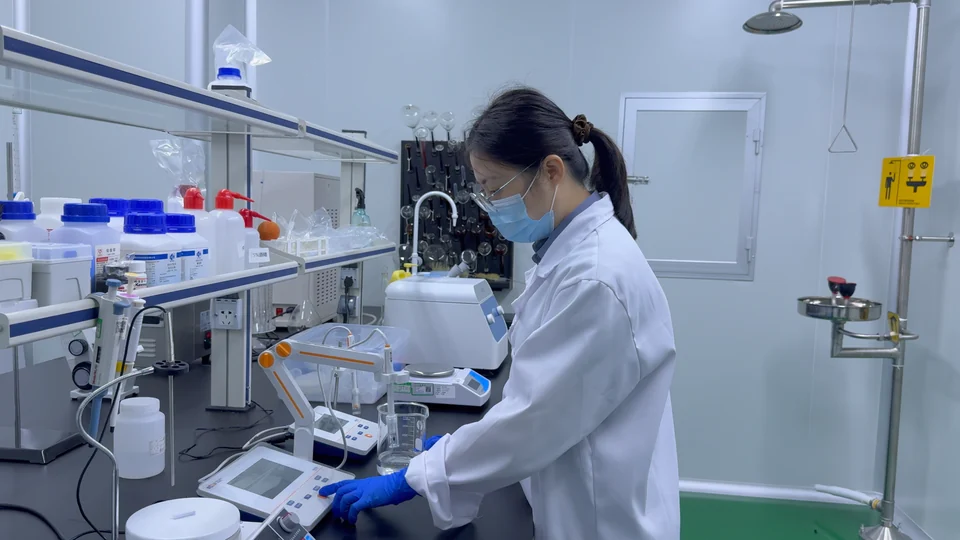
Sample preparation at Lifeworth. Keep the sample identity and preparation conditions consistent when comparing dispersion and assay results.
Send the same brief with every request for quotation
Name the chemical form, grade, and any permitted alternative. Require a separate quote for each option.
Agree on the assay method, reporting unit, and calculation before finalizing the serving statement.
Record fill mass, clumping, sediment, and seal condition in the intended pack.
Ask for the current specification, lot COA, sampling plan, and change-notification process.
Send the target serving, draft label, destination market, and pack format. For eligible projects with approved specifications and available materials, Lifeworth can target 3 days for samples, 25 days for a first order, and 15 days for a repeat order. Confirm dates against the agreed project scope.
Frequently asked questions
What changes if I ask for creatine hydrochloride?
Request a separate specification, assay and reporting basis for that chemical form. Recheck serving mass, taste, processing, and the proposed label in the target market.
How should I specify buffered creatine?
Ask for the material composition and the method used to verify the creatine content. Match the trade name to an agreed ingredient specification.
Does 200 mesh guarantee how the powder mixes?
Run an actual dispersion test in the intended beverage. Sieve data and a cup test answer different questions about the powder.
Which documents should I approve before scale-up?
Start with the signed specification, the supplier’s sample COA, the finished-product release plan, and the proposed label basis.